I Found… Something?

Have you ever been doing an absolutely mundane task and suddenly stumbled upon something utterly weird? Like can’t stop thinking about it, can’t look away weird?

Recently I was trying to find the website for Tuatara Brewery. Now that was difficult, because they don’t actually have one, rather they have a page on DB’s website. But searching for Tuatara’s website led me to a completely different place. A weird place. A place that just doesn’t make any god-damn sense. A website called organicbeer.co.nz.

I’m not going to link to that page. At time of print it’s still there, but don’t go visit it for reasons that will become clear. This website struck me because well, almost everything on it was wrong. Not just factually wrong, but weirdly wrong.

Organicbeer.co.nz bills itself as a “travel blog about New Zealand Beer” which is a weird choice of URL for a travel blog. Then there’s the title of the website “Mikes Brewing”. Now if you’re of the same vintage of ‘craft’ beer nerd as me, that means something to you. Mike’s was a brewery in Taranaki, and they did indeed make organic beer. Mike’s went into receivership in 2017, and through a series of changes and restructuring, became a bistro in New Plymouth, which still exists to this day. So why then is this website pretending to be Mike’s Brewery?

And it is definitely pretending to be the Mike’s Brewery. On the website’s menu is a dedicated tab and page profiling Mike’s Brewery, that does reference the brewery’s old location, but doesn’t mention that the brewery has moved and no longer makes beer. This is very strange. I just couldn’t shake the feeling that something was very off but I was also kind of hooked. I wanted to know: What am I looking at here?

At this point, I noticed a page called “NZ’s Top 100 Beers: A Brief Overview”, published October 2, 2023. I decided to give it a read and let me tell you, it’s weird. For starters this is supposed to be a ranking of top beers in NZ but it has a lot of extra guff:
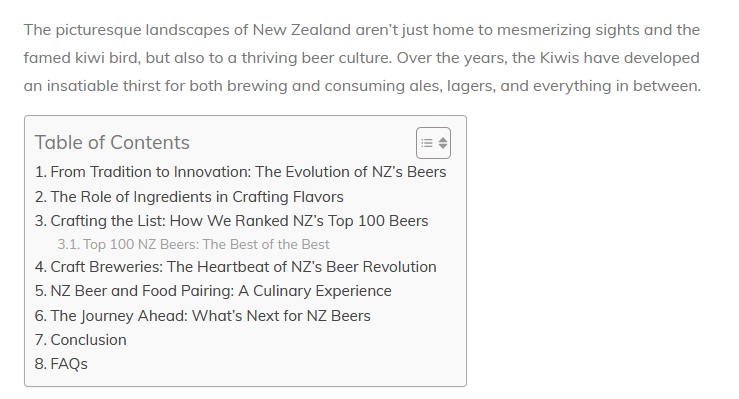
And these extra sections are full of platitudes about beer and brewing that are so generic, they’re almost meaningless:

OK, fine. This person isn’t a great writer. Lets get to the list. It’s organised by beer style, with a desciption and an example of a beer that fits said style. This is a little bit of an odd way to do it, but whatever. Let’s give it a chance. Trouble is, this list is full of things that are simply wrong:

Garage Project Hāpi Daze is not a Saison. This sort of error kept happening as a I scrolled down the list. Does the person who wrote this actually understand anything about beer styles? Many beers were filed under the wrong style category and some beers were listed that I’m sure were no longer in production when this article was written, sometimes from breweries that had closed years previously. I had a realisation: I don’t think this list is written by someone with a poor grasp of beer styles. I don’t think it was written by anyone. I think it’s AI.

I suspect this was created by someone plugging a prompt into ChatGPT (or similar) such as “Write a list of the top 100 beers in New Zealand by style category”. The AI in response has gone to the internet, presumably Untappd and the now defunct RateBeer and scraped a list of top beers in New Zealand, smashing it together with a list of beer styles. Where the two lists don’t match up – styles where there aren’t a lot of beers that fit the category, the AI made connections that don’t make sense.

A great example would be Bière de Garde. I doubt there’s more than half a dozen examples of the style in New Zealand, and probably none of them are ‘core-range beers’. So the AI chooses a beer that might have vaguely similar words in it’s tasting notes. In this case, Choice Bros Reet Petite, a Red IPA.

I started looking for a smoking gun – something that proved this list was wasn’t written by a person: an AI hallucination. It wasn’t long before I found one:

Tiamana Pils Dunkel is not a beer that ever existed. I know because I was indirectly involved with Tiamana. I was there when they opened in 2015 and I was there when they shut in 2018. At no point did they ever make a beer called Pils Dunkel, or even a Dunkel. This is a completely fictitious beer.

With all this in mind, I started reading more and more articles. Pieces with titles like “10 Must-Try Craft Beers in New Zealand”, “Exploring the Strongest Beers in New Zealand” and “What Is The Most Popular Beer In New Zealand”. These are all titles you might plausibly find on a lifestyle or travel blog. But if you actually read them, everything about them is wrong. Not factually wrong. The details are usually broadly accurate, but just somehow the articles are always just off.

For starters, the structure of the articles is weird. Almost every article has a table of contents, whether it’s warranted or not. They also end with a ‘Conclusion’ section and sometimes even an FAQ. It makes it feels more like technical writing, not lifestyle or travel writing.

Take “10 Must-Try Craft Beers in New Zealand”. It starts off with a weird table of breweries and mini bios called “Main Features”, which doesn’t feel right to me. Again, it feels more like part of an abstract or summary from a technical article. After that it goes to detailed bios, which again feel like more empty platitudes, stretched versions of the “Main Features”, with details pulled and re-worded from marketing material.

Garage Project, Epic and 8 Wired are the first three profiles, But for some reason 8 Wired gets a whole extra section, titled “The Spirited Rise of 8 Wired Brewing Co.” which is an almost exact repeat of all the info from the previous paragraphs. And I do mean exact, down to the sentence level. Here is the opening sentence of section one:

8 Wired Brewing Co., a beacon of inspiration for aspiring entrepreneurs and a shining example of Kiwi ingenuity and relentless pursuit of excellence.

And here’s a sentence of section two:

…embodying the essence of Kiwi innovation and tenacity, 8 Wired Brewing Co.’s journey resonates deeply with those harboring dreams of entrepreneurship.

That’s literally the same sentence worded two different ways. This feels like classic AI repeating itself – pulling information form articles and websites, shuffling keywords and subbing synonyms to endlessly recycle the same basic points.

This feeling really stuck with me. It felt like everything was made up of borrowed parts, cobbled together. Like I was looking at Giuseppe Arcimboldo’s painting of Vertumnus. Except instead of a clever collage forming an optical illusion, it’s a weird meaningless mish-mash that, try as you might, you just can’t make sense of.

This feeling peaked with the article “Unravelling Auckland’s Steam Brewing Secrets”. You would assume this is an article about Steam Brewing Co., the Auckland-based production brewery that makes beer under contract for many different breweries around the country, right? Not so.

This piece is about steam in the brewing process, as used by breweries in Auckland.
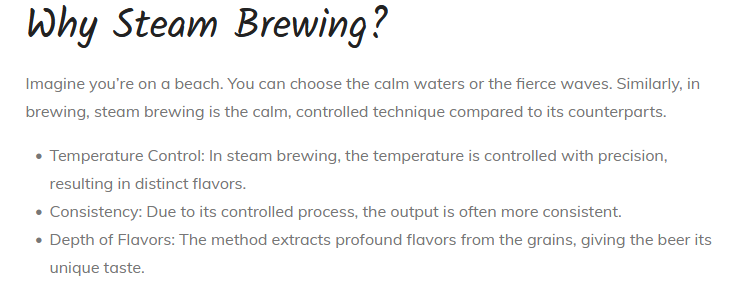
I suspect someone has prompted the software to write about Steam Brewing and confused, it’s spat out several hundred words of nonsense, including recommending visits to three breweries that I’m pretty sure don’t exist:
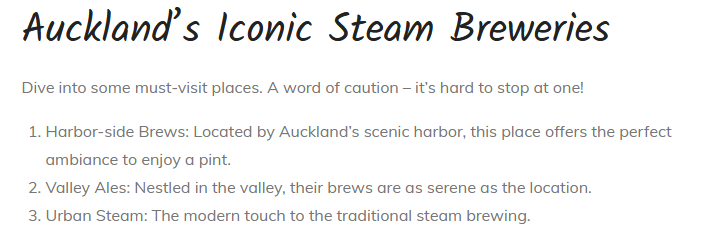
At this point, I think I’ve got the picture. Someone has made a fake blog about beer in New Zealand, probably using AI. Staring at my screen and feeling bamboozled, I’m left with many questions, chief among them: Why? What’s the point of all this? Is it a scam? It certainly feels scammy. But if that’s the case, what’s the actual hustle going on here? I start digging, maybe somewhere in one of these posts is this website’s raison d’etre.

I find myself looking at a list of recently published posts. So far, every article has been about NZ beer, but not the last five:

They’re still broadly beer related, except the second one. American Football? This article, while sort of about NZ it’s only tangentially related to beer. It’s mostly about watching American Football. But something else jumped out at me – there’s a link.

That’s when I realised: thus far, I haven’t seen a single link anywhere else on this website. This feels like a dog that isn’t barking. Surely if this is a scam, the point of the scam would be whatever this website is trying to push me towards, which has so far been nothing.

But now there’s a link. To the New Zealand TAB website. Gambling? Weird.

That’s when I remember the other recent article: The Perfect Pairing: Enjoying a Day at Hastings Races with a Refreshing Beer. There’s a connection there: races – horse racing – gambling. Was this the point? Some sort of asymmetrical marketing campaign for the TAB?

In a word – no. Because this isn’t an article about horse racing in Hastings, New Zealand. It’s about horse racing in Hastings, Vancouver, British Columbia, Canada. How does Canada fit in to all this? There’s another link on this page. But this time it’s a link to an Aussie gambling website justhorseracing.com.au, not the TAB.

On the one hand, I suspect this is AI making nonsense connections, but it also feels like the closest thing I’ve found to a pattern. I searched for a while to see if I could find any more external links but turned up nothing. A dead end.

Stepping back a bit to think about a new line of enquiry. If I can’t figure out the why of this website, maybe I should focus on the who. Each article has something I’ve thus far ignored: a byline. The author of this website is someone called Ross Walton.

There’s an about page too. And just like every other page on this stupid website, it contains a lot of words, but almost no information. As near as I can tell, he is apparently some dude who likes beer and has visited some breweries. That’s it. That’s the only biographical data to be found. But a name is something to go on, and there’s a picture too:

This might be useful. If I can find some other record of this Ross Walton and if I can match another photograph, maybe I can crack this thing.

The trouble is, Ross Walton is a very generic name. Only a few degrees less generic than ‘John Smith’. A simple search is going to reveal scores, maybe hundreds of Ross Waltons. So I try a series of searches.

“Ross Walton + Beer”, “Ross Walton + New Zealand”, and so on point me straight back to organicbeer.co.nz. Even filtering out those results I find multiple records of Ross Waltons, none of which I can positively ID.

Social Media is the same: FB, Insta, that other one, and LinkedIn. Too many results, nothing solid to go on. It doesn’t help that he looks like a generic, late millennial white-boy. That describes a pretty big chunk of the ‘craft’ beer demographic and yes, I’m in a glass house on this one.

I tried to get a bit clever and go the Companies Office. I’ve spent a lot of time tracing breweries and the people who own them through the through the Companies Register. Again, multiple Ross Waltons or variations thereof, but nothing verifiable. It’s the same for IPONZ.

I’m stumped. But I’m also looking at that photo. I had originally planned to see if I could find any other pictures of Walton and match the face in that photo. But what if I matched that exact photo?

I ran a reverse Google Image search and immediately found the original. And I can say it is the original, because the version on organicbeer.co.nz has been cropped:

And the source of the photo sparks joy: it’s Alchemy Street Brewing. Eureka! An actual connection to a New Zealand brewery! I’ve struck gold!

But have I? Straight off the bat there’s a few issues. First of all, there’s no mention of anyone called Ross on the Alchemy Street About page. They’re brewed/run by Ed Bolstad. There isn’t any mention of a Ross on their Facebook page. Nor does that particular photograph appear on their social media. Finally, after looking a pictures on their Instagram, I noticed that photo doesn’t even appear to be taken in Alchemy Street’s taproom. Is it of someone involved in the business or a stock photo?

I went back to Google Images and ran the uncropped image through a search again. I confirmed what I’d feared: it’s a stock photo, versions of which you can find all over the web. A dead end again.

Am I being too clever? Too laser-focused? What if I cast the net wide? I mean, really wide? Like, just Google searching “Ross Walton” wide? So I did. And I found something… else.

It’s a website: rosswalton.com. Although to call it a website might be a bit grand. It’s more like the idea of a website – a simulacrum.

Outwardly it looks like a blog, with six posts on it, but weirdly they’re all published on October 4, 2023. They’re just text. No photos, no links. But what struck me most of all was that they are tonally identical to the posts on organicbeer.co.nz. By that I mean there’s a lot of words, but next to no information.

Take this quote for example:

At first that feels like information, until you realise it’s so vague that it’s completely unverifiable. I tried searching for things called the Innovation Award and the Technology Pioneer Award. I found multiple different awards with those names, none of which seem to have been won by a Ross Walton.

Something else has caught my eye:

AI. Yeah, that figures. If this site and organicbeer.co.nz were written by the same AI, that would explain why they have the same weird, alien tone. But then what’s the point of all this? Is this all just someone messing around with AI tools? How does online gambling fit into that? I was pondering this when something else occurred to me: Internet scrubbing.

If you’ve never heard of it, a simple summary would be someone attempting to remove as much of their online presence as possible – things like deleting your social media accounts and requesting removal of yourself from online public records. But there’s another technique to, if at least not remove, then hide something someone don’t want known about them that can be found online. A technique that we might call “flooding the zone”.

Say someone has been convicted of minor fraud, and there’s an article on a news site about it. Next time they apply for a job, if the employer searches their name and finds that article, then there’s no way they’re getting the job. You can’t delete those articles, but what you can do is push them so far down the Google search results that no one ever sees them. The way to do that is by publishing inane, vaguely positive ‘articles’ about yourself, or with your name in them that populate search result ahead of the negative press. Articles that look very much like these ones.

I went digging to see if I could find any evidence of criminality by Mr. Walton. And I mean deep. 20 pages of search results turned up nothing. So I went to news sites – Stuff, Newsroom, RNZ, NewstalkZB. Still nothing. Further afield – The Guardian (AUS), The Guardian (UK), and so on. Nothing. Which isn’t to say I didn’t find evidence of various Ross Waltons committing various malfeasances but nothing I could link to the two websites though New Zealand, beer, brewing, tech, AI, cybersecurity.

I’m really running out of options now. But I’m still looking at website’s URL and I get thinking: I was pretty sure oragnicbeer.co.nz used to belong to the Mike’s Brewery. There’s a way I can prove that, using The Way Back Machine.

The Wayback Machine, also known as the Internet Archive, is essentially a website that archives other websites. It takes periodic snapshots of any given site to that you can look up at a later date. If I wanted to see what content was hosted on organicbeer.co.nz in say 2012, I can go and view a snapshot of that website in that time period.

So I did. And I was correct. There are captures of that website going back to 2004. The most recent ones, December 2023 to March 2025, show the website as it currently exists. But if you jump back in time to the mid-2010s and visited that URL, you would be redirected to the Mikes Brewery website (a separate URL, mikesbeer.co.nz). I actually kind of recommend it as a fun way to view the evolution of their website over time. The earliest captures, show you what it looked like when they still went by the name White Cliffs Brewery.

Captures of the Mike’s Brewery website (the real one) are found from 2004 to early 2018, and then they stop. This would be the point that Mike’s Brewery gave up ownership of the domain. This is when I noticed something else – a series of isolated captures from July 2020 to March 2022. When I viewed them, I discovered something that I was not prepared for. Something that absolutely blew my mind.

There’s another whole version of this website. With a different aesthetic and different articles:

It even a logo:

When I saw it had a logo, I wondered where they’d got it from. What I haven’t mentioned thus far is that most of the photos that illustrate this website have clearly been scraped from the internet. I assumed this had been stolen from somewhere. But I did a reverse image search, this one turned up no results. It doesn’t exist anywhere else on line. This thing is bespoke.

Looking at it, it’s not obviously made by one of those online logo generators. Nor does it have any of the most obvious signs of AI generation – typeface inconsistencies or melting letters. But also I’m not saying it’s not AI generated. It is ugly enough to be.

While a whole new website opens new possibilities – there are six new articles to read. But what I quickly learn is, while they are completely different, they are more of the same slop as we’ve already seen. Take the article “The Best Craft Breweries here in New Zealand”. Here’s the opening sentences:

That feels like AI to me: *Beep-boop* I am not a computer, *WHRRRRR*. I was reading a piece called “The Incredible Evolution of Beer” when something jumped out at me:

There it is: online gambling. And this time it’s not a subtle link, slipped in. This time it’s “Beer is like gambling. People like gambling. Gamble here.” What the fuck? Combing through the other articles, I found multiple references to online gambling. The most egregious being from “Put Down the Beer for Now. Do This Instead”. You know what advice it gives for a safe and healthy alternative to drinking? That’s right, gambling!

Is your highly addictive and detrimental hobby getting you down? Why not try a different highly addictive, detrimental hobby? Enjoy responsibly!

At this point I’m fairly certain that this is a grift and online gaming is the point of it. But at the same time, building multiple fake beer websites for the purpose of funnelling what can only amount to a handful of people to gambling websites just feels too, baroque.

I’m still pondering the URL. It has to be important somehow. Finally, something occurs to me: it’s a .nz. There’s an online function called a whois search. Essentially, you can enter a web address into a whois page and find out who has registered the domain.

Usually this will only tell you which domain company a website is registered with. I had done it with rosswalton.com, and gotten nothing useful back. But .nz domains are a bit different. There’s a database kept by the New Zealand Domain Name Commission of all websites that end with .nz, which contains more information than other online whois databases. And it’s searchable at at dnc.org.nz.

I plugged organicbeer.co.nz into the search box and immediately I had two new pieces of information: a name, and a company.

Which I will not share with you. The reason for this is pretty simple. I’m 99% sure that for the first time in this post, I’m actually talking about a real person. Which is to say I think Ross Walton is fake, but this guy and his company are definitely real. On the one hand, everything I’m writing here is publicly available information. Nor am I accusing anyone of anything illegal or even particularly unethical. On the other hand, I don’t want to bring any kind of heat on this guy, or invite it into my life. If you really want to know those details, they’re there for the finding.

So this outfit is an SEO company out of Ukraine. SEO stands for Search Engine Optimisation. To put it simply, SEO covers ways in which website owners attempt to push their website to the top of search engine results, thereby getting more people to visit their site. It’s one of those incredibly important but also very boring things that has massively shaped the way the internet works.

For the first time ever, I feel like I’ve hit bedrock. This has to be the answer. I just have to make the final connections. I spent a lot of time tracing the online footprint of this guy and his company. But I couldn’t track it back to beer or New Zealand. Eventually though, I found it on what I would describe as a slightly skeezy-looking Vietnamese tech website. I found an article that mentioned both him and his company extensively. It was Vietnamese but as soon as I had translated it, I knew I’d found the answer. The Rosetta Stone that made everything else fall into place:
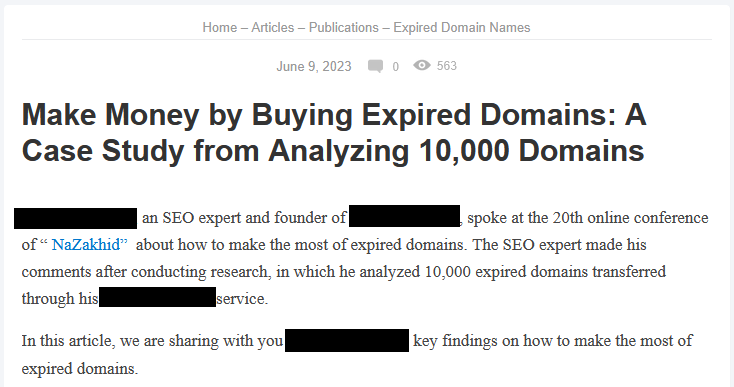
Details are censored, obviously.

Bingo. Cracked it.

This piece is essentially a report on a presentation this person made to a tech conference, laying out how this company makes money from expired web domains. The translation was a little patchy, but the gist of it is summarised here:

Basically what they do is buy old website addresses for cheap and fill them with content. That content drives views, thereby increasing the value of that web domain to companies that want to sell you something. That domain can then be on-sold to said companies at a higher price.

That’s what’s happened to organicbeer.co.nz. Mike’s Brewery dropped the domain back in 2018, and it was re-registered by this company in 2020. I even spotted this little nugget of info that more or less confirmed my deepest suspicion:

I’m pretty sure that’s why organicbeer.co.nz feels like AI slop: because it is.

Mystery solved. Unwittingly, I’ve probably added a few cents worth of value to the domain name with the several hundred clicks I made researching this article. You can see now why I haven’t linked directly to the website. And I’ll say to you now: don’t go there either. There’s no point.

I still haven’t figured out how exactly online gambling fits into this. My best guess is that it’s some sort of affiliate marketing program. If you click on that link, that referral is recorded. If you then go on to make a purchase on that website, the original website gets a cut for that referral. Across 10,000 websites, it might be a viable revenue stream. I am however, speculating here.

I’ve been writing all this up for a couple of weeks, and looking back I feel a little deflated. I’m happy I figured it out, but mysteries are almost always more exciting than answers. I’m left with a question: why did I get so obsessed with this that I sent literally hours searching for the answer?

Partly it’s because I can’t resist the chase. Like a foxhound, once I had the scent I just had to keep going until I’d run it to ground. But there’s something else that’s been bothering me that took me a while to figure out.

I’m a certain vintage of ‘craft’ beer person. I came up in the late 2000s, and back then ‘craft’ beer was these folks we knew: we were mostly all friends, or at least friendly collaborators. We drank in each other’s bars, visited each other’s breweries and attended each other’s events.

Someone and unfortunately I don’t remember who, once described the era as being like the early days of Britpop: going down to Marchfest from Wellington was like Blur going from Sheffield to Manchester to see an Oaisis gig. You knew you’d run into the Gallaghers at the Sprig and Fern afterwards.

That started changing as the industry grew and matured. Frankly it needed to and that was partly why I started this blog. Even though I’m not behind the bar anymore, I do still have something of a fraternal relationship with the ‘craft’ beer industry. People like Søren Eriksen from 8 Wired are still friends, who I’m always happy to see.

So when I see their names and businesses being used by something that seems like a scam, I don’t like it. Now it turns out that’s not really the case. As I said, there’s nothing illegal happening here. I also don’t think anyone has or will be harmed by this website, except maybe a couple of tourists left wandering around Auckland, looking for breweries that don’t exist. But it still just doesn’t sit right with me.

Rather than end on a down note, here’s something a little cheerful: proof that AI still has not and may never supplant human beings. It’s my favourite AI-oopsie from this whole experience:

Armpit. Bowling.

You’ll have to try harder that, GPT.

The Haze-Craze is Not All-Encompassing

There has been a lot of digital ink spilled on the rise of the Hazy IPA. Whether you love them or hate them, everyone must admit that they have stormed the beer scene like no other IPA variant (Imperial, Black, Red, White, Session, Grapefruit, Milkshake, Glitter, Brut) before or since.

Personally, I tend towards drier beers which rules out a lot of Hazies. I am however, not at all adverse to a good example of the style. I’ll drink a good Hazy IPA over a faulty or unbalanced but otherwise clear IPA any day.

The Observation

A lot of the commentary around Hazy, particularly on social media has been of the apocalyptic takeover of the Hazy, squashing out all other IPA, nay, any other style of beer! These discussions are often fueled by photos like this one, sent to me by Michael Donaldson author of Beer Nation and editor of Pursuit of Hoppiness.

72288699_10157696608371543_4775482288546775040_o

Originally from PorchDrinking Chicago

Now that’s a lot of Hazy IPAs to be sure. Also the other beers seem to be exclusively Imperial Stouts and Sours, which is weird and seems like a bad idea.

In my own bar and pre-COVID-19, we had been running Hazy and non-Hazy IPAs more or less alternately on the same tap. This worked out well overall, but we definitely had customers who wanted one or the other and were disappointed when we didn’t have the style of IPA that they specifically wanted.

Post-lockdown, we decided to try running two IPA taps, one Hazy, one traditional/West Coast/NZIPA. What I noticed when we did this was that a keg of very popular Hazy IPA like Garage Project Fresh or McLeod’s 802 would sell out faster than any other beer, but the same was true of certain non-Hazy IPAs like Liberty Knife Party.

In fact, one recent Friday night, I tapped a keg of McLeod’s Northern Hammer NZIPA and a keg of a new Hazy from a less well-known brewery almost simultaneously. The McLeod’s ran out within 24 hours, whereas the Hazy was still on tap come Monday morning. Some beers just make customers fizz more than others, regardless of their clarity. Over time though, this effect is eventually evened out.

The Hypothesis

I have a theory: All things being equal, Hazy IPA is not substantially more popular than other IPA styles. The question is, how do we test this hypothesis? How do we make all things equal?

There’s a lot of factors that go into beer choice. Some are quantifiable – price and ABV. Others are less well-defined. Beer quality, both in terms of brewing faults and overall balance matters for sure. Then there’s ‘brand’ in all its nebulous forms. A brewery’s reputation and popularity, the beer’s name, the tap badge art – all these factors matter more to sales than most brewers would like to admit.

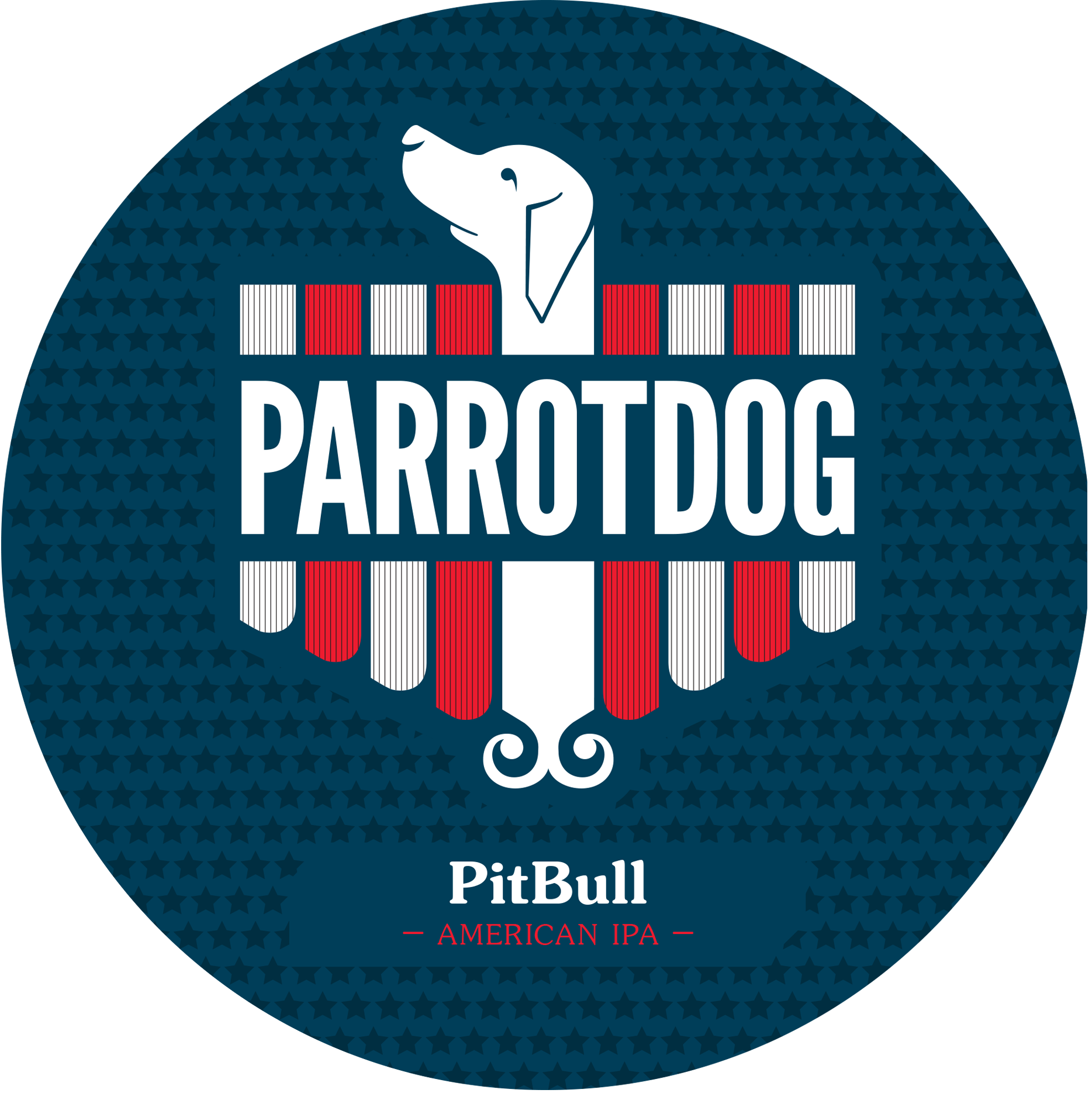
Enter the ParrotDog ReinCanation range. These are a range of beers, mostly IPAs, named after people. They have a uniform geometric art style and for the most part, are line-priced, meaning they cost the same per keg.


The ReinCanation range presents the opportunity to level the playing field. ParrotDog makes good beer generally, and particularly excellent IPAs, both Hazy and non-Hazy. The labels and beer names are variations on the same theme. We need two IPAs of equal price and strength, one Hazy, one non-Hazy. Please welcome Adrian and Lindsay.

They are both strong IPAs. Adrian is a 7% Hazy, Lindsay a 6.8% West Coast IPA. They’re close enough in alcohol strength that this wouldn’t play a major role in a customer’s choice. They both cost $13 per 425ml glass (come at me, South Island). They were both very fresh and critically, very delicious. Putting them both on tap at the same time was the closest to a fair fight that we could achieve.

The Experiment

Adrian was tapped at Golding’s Free Dive at 4:30pm, Thursday 30/7/20. Lindsay was tapped at 8:30pm, Thursday 30/7/20.

Now already you’ll notice an issue, in that Adrian got a 4 hour head-start. The brutal reality was that I couldn’t justify pulling off the remainder of the keg preceding Lindsay, which would have entailed a lot of work and wasted beer (come at me, scientific method). Those 4 hours were busy so Adrian got a significant boost. But I believe that the experiment remains valid, for reasons we shall get into.

The race was on. Both beers were on tap all afternoon of Friday 31/7/20. The Adrian keg ran out at 6:30pm that evening, for a total of twenty-six hours on tap. The Lindsay stayed on tap for two more hours, finishing at 8:30pm, for a total of twenty-four hours on tap.

Right there, the results are interesting. Although Adrian the Hazy went on four hours ahead of Lindsay, Lindsay finished two hours faster than Adrian. Looking at the raw numbers, it would seem that the West Coast IPA was actually more popular than the Hazy! We do however need to consider the two periods at the start and finish of the experiment, where only one of the two beers was on tap.

On the one hand, 4:30 to 8:30pm Thursday is a busy period of trade for the bar, but it’s not as busy as 6:30 to 8:30pm Friday, which is often our busiest two-hour period of any given week. On the other hand, Fridays are not twice as busy as Thursdays.

Without getting too bogged down in the details, I’m going to say that it’s more or less a wash between the two kegs. Ergo the conclusion I’m going to reach from this experiment is that side by side, there was no clear or significant preference for either Hazy or Clear IPA among customers.

Further Discussion

Obviously this experiment was far from rigorously scientific. It only really gives us insight into a certain bar, at a certain time. If it were replicated elsewhere, results may vary. But what I do think it shows is that demand for Hazy IPA is not all-consuming. Nor has it rendered all other IPA styles obsolete.

While cashing-in on the Haze Craze is potentially lucrative for brewers, there is still value in providing a range of beer styles. I would not recommend anyone turn their brewery into a Haze factory. Likewise, bar managers would be ill advised to turn their tap lineup into something resembling the picture at the start of this article.

Love it or otherwise, the Hazy IPA is not going anywhere. I’m actually thankful for one thing it has achieved: Ending the New Zealand beer drinker’s obsession with crystal clear beer. This is a particularly annoying hangover from ‘craft’ beer’s real ale heritage, and not something I’ve ever viewed as a useful indicator of beer quality.

After all, I’ve spent the better part of a decade wading through pint after pint of greasy, diacetyl laden, green-apple, acetaldehyde flavoured, astringently bitter, over-hopped, vegetal, overly sticky, caramel-malted, poorly packaged and oxidised (but otherwise crystal-clear) beers. I’d trade the lot for a well-made Hazy anyday.


Dear Brewers: Don’t Photoshop This Christmas

As we step into December it’s officially socially acceptable to begin displaying Christmas decorations (or alternatively, it’s no longer acceptable to shout at people who displayed decorations in November).

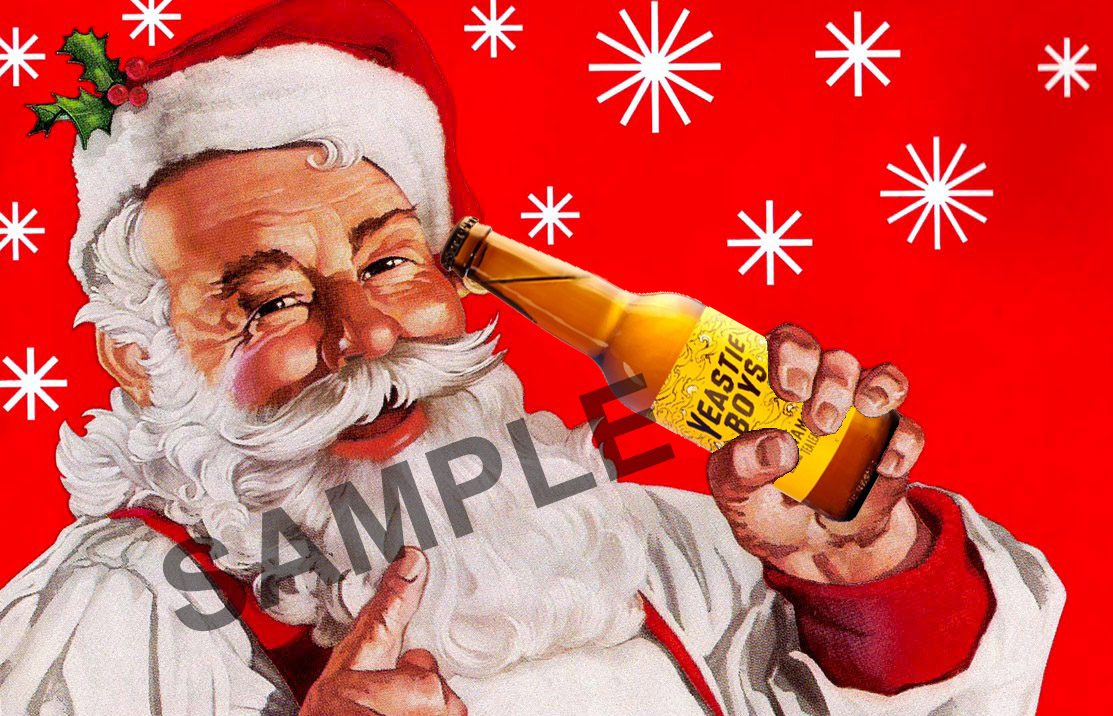
As we enter our busiest trading period of the year, I say to the brewers out there: make hay, have fun, celebrate, stay safe. But whatever you do, do not attempt to Photoshop beer into Santa’s hands, unless you know what you are doing.

Exhibit A:

Urgh.

It looks cheap. The resolution is terrible. Nothing matches. Don’t do it.

Instead, I will do it for you. I’m a little handy with Photoshop, as seen here, here and here. For the low, low price of one six-pack of your beer, I will Shop your bottle/can product into Santa’s hand. As a bonus: for the price of one case (24 x 330ml or 12 x 500ml), I will even adjust the angle of the beer level and/or remove the bottle cap.

Tempted? Here’s a sample of my work:

Pretty tidy and I have a fast turn-around. To take up this offer, contact me via twitter, and send me a high-res photo of you bottle product. Then sit-back and watch the Christmas orders roll in!

Dank, Bro.

One of the hottest descriptors for beer to come out of the last two years is ‘dank’. Specifically, it’s used to describe hop characters that are particularly resinous and reminiscent of marijuana. Personally, I’m not a huge fan of the term and it’s druggy overtones. You know what else is described as ‘dank’? Memes.

The term ‘meme’ was coined by Richard Dawkins and refers to essentially a little package or unit of cultural or ideological ‘data’ that may be transmitted from person to person like a gene through generations (or perhaps like a virus through populations). That’s the high-minded academic definition at least. In practice, a meme is a funny photograph, frequently with a caption, often used as a witty response to any discussion on the internet.

This is low-culture at its lowest. But sometimes the combination of an evocative image with a few simple words can be one of the most eloquent single pieces of communication you’ll ever see.

Now is this surprisingly long discussion of memes a thinly veiled excuse for me to use my blog to post a bunch of things that make me lol? You betcha. So here it is. A selection of dankest ‘craft’ beer memes for your enjoyment.

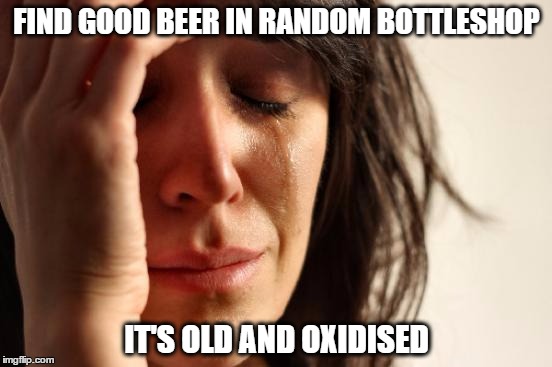
Good memes express something that resonates with people. Like when you’re visiting a small town, and you’re damn sure you won’t find any good beer in the local shops, but then you do:

On the other hand, some memes can express something deeply personal. Like my reaction every time Garage Project releases another weird beer packed full of exotic ingredients:

OK, let’s be honest. this is my REAL reaction every time Garage Project releases another weird beer packed full of exotic ingredients:

On other occasions, I don’t have strong opinions. This is me every time the whole “East Coast IPA” debate kicks off:

This, however, is my reaction when I read the Beer: The Beautiful Truth website:

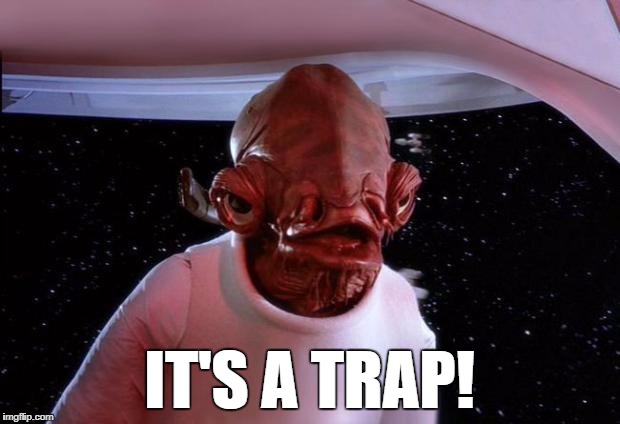
Speaking of DB Breweries, here’s my reaction when Tui announced they were going to start making small-batch experimental beers:

A lot of my strongest feelings about the brewing industry come from talking to people who want to start breweries. Particularly when I hear a homebrewer talk about ‘turning pro’:

One of the great things about memes is that while they express universal emotions, they can be adapted to very specific audiences and milieus. Here’s one most brewers can probably relate to. You know when you’re trying out a new Pale Ale recipe and you get just the tiniest hint of something buttery hiding in the background?

And if we’re on the subject of beer recipes, how many brewers will confess to this little white lie?

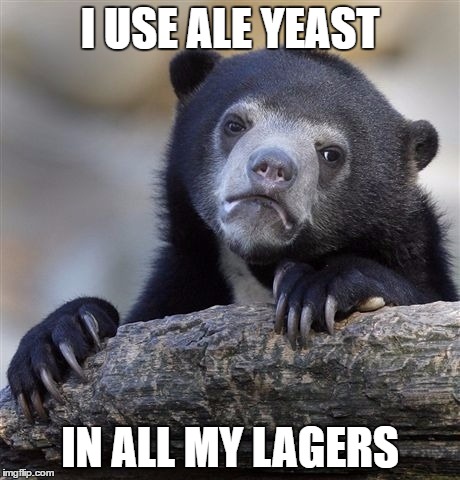
Speaking of white lies; how many brewers that make clean, American-style Wheat Ales will pull this one?

And finally, here’s me every time some tries to once and for all define ‘craft’ beer:

Podcast: Will it Gaff?

With our passion for Shady now well established, Phil and I dig into the history of beer and softdrink blending, and seek an answer to the question nobody asked: Will it Gaff?

Joining us to blend beer with ginger beer is Annika Naschitzki, from Tiamana Brewery. She shares some great insights into German beer-blending traditions.

Will it Gaff can be streamed here, or over on the Beer Diary, or Annika’s blog, The Brewer’s Daughter. To download, click the icon in the top right corner, under the Soundcloud logo or go here.

Our title track is Square Beer by The Coconut Monkeyrocket.

Show Notes:

  • [11:10] – Our bottle of best bitter was infected. Out of public interest, we kept it in the show. Rather than publicly naming and shaming the Brewery, we edited out the their name and had a word with the brewer privately about it.
  • [21:20] – We realised after recording, that at no point do we explain what a Diesel is a 50/50 blend of Lager and Coke, sometimes drunk in Germany.

New Zealand’s Oldest ‘Craft’ Brewery: Further Discussion

Over a year ago I wrote this piece on what I considered to be New Zealand’s oldest ‘craft’ brewery, which has since become one of the most popular articles I’ve ever written. Since then, a few interesting points have been brought to my attention, which warrant further discussion. So let’s start with something that has been in the news lately…

Mike’s Went into Liquidation

White Cliffs, better known as Mike’s Brewery, was and (spoiler alert) still is my original pick for oldest brewer. Founded in 1989, it narrowly boxes out Sunshine Brewery for the title by two months.

Many of us were surprised and perhaps a little dismayed to hear in June that White Cliffs would be going into liquidation, due to outstanding Customs and Excise debt. But this wasn’t to be the end of Mike’s Beer. Owner and operator, Ron Trigg announced that he would be starting a new company (Mikes Holding’s Limited) and buying back White Cliff’s assets from liquidators, essentially starting Mike’s again, now unsaddled by historical debt.

I’ll be honest – it’s a somewhat dubious bit of company law that allows this and it can, to put it bluntly, be used by the unscrupulous to bilk creditors. I’ve criticised another brewery for doing this sort of manoeuvre in the past; which makes it a difficult move for me to support. But on the other hand, that not necessarily what’s happening with Mike’s. In fact it was revealed by Ron in an article in The Pursuit of Hoppiness Magazine, that Mike’s Holding’s Limited has taken on approximately $100,000 of debt from White Cliffs (Summer 2016, p. 47 link to the issue here). So it seems that Mike’s is trying to do the right thing by their creditors.

On balance, I’m happy that Mike’s lives on. The Triggs are friends and good people, and I don’t want Mike’s to disappear.

But what does that mean for their status as ‘Oldest Brewery’? If a brewery goes out of business, then starts up again with the same name, from the same location making the same product, is it fair to call it the same brewery? To make a call on the matter, I had to go back to my original criteria for judging oldest brewery – continuity of supply. Could I, as a punter, reasonably expect to go buy a beer, and it to be the same product?

The answer for Mike’s is yes. The product hasn’t changed; it’s the same beer, made by the same people, in the same place. What’s happened is some shuffling of paperwork, to write off an insurmountable amount of debt. Many consumers will never know it happened…

So Mike’s can, in my opinion, hold onto it’s Oldest Brewery title for now. But there’s another brewery that quite a few people have brought up, which I really should have addressed in my previous post.

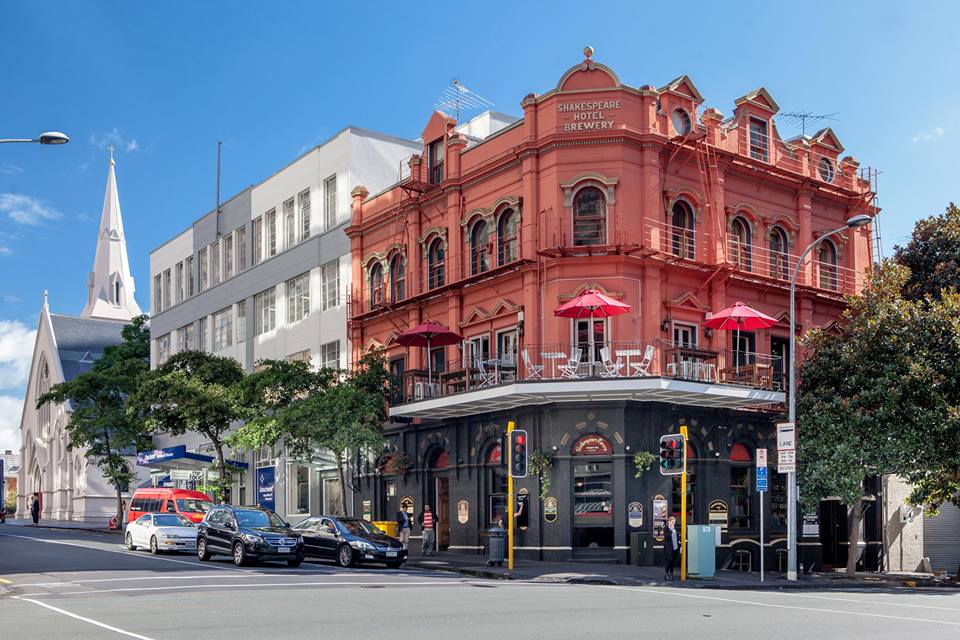
What about the Shakespeare?

The Shakespeare Hotel was founded in 1898, and is often touted as having the oldest licence to sell alcohol.

The Shakespeare Hotel’s brewery was commissioned in 1986, three years before Mike’s, making it at the time, the first modern brewpub in the country. The original brewer was one Barry Newman. When I was writing the original post, I admit I dismissed The Shakespeare out of hand.

While The Shakespeare is currently a functioning brew pub, it was shut down some time in the 2000s and brewing did not take place there for several years. In fact it was Ben Middlemiss of contract brewery Ben Middlemiss Brewing who was instrumental in getting it going again:

It was once the most famous brew-pub in the city, but the brewery side of the operation was neglected and ended up being shut down. [Ben] Middlemiss asked if he could use it to make his own beer. “The owners weren’t interested in having the brewery going again and they seemed happy with me doing it myself, but the punters started to ask ‘When is there going to be beer again?'”…

Eventually [Shakespeare] beer did flow again, the Dogberry Pale Ale coming out just before Christmas 2011. (Donaldson, 2012, p. 127).

Obviously, a brewery closing down for a period of time will break the all-important criteria of continuous supply (this is one of the reasons I disqualified McCashin’s earlier). So I crossed The Shakespeare off the list.

Sometime after I published the previous post, I spoke to Ben about The Shakespeare Hotel and learned, to my surprise, brewing was shut down there as late as 2009. This means that far from being a long leave of absence, it was a period of roughly two years that no beer was produced, not the five or six years I had assumed earlier.

More recently though, when I spoke to Ben again, he dropped this bombshell:

When we refurbished and resurrected the brewery, Frances McCullough, the actual owner of the Shakespeare building and various other pubs around Auckland, was still pouring some of the beer left in the tanks from when Barry Newman  [The Shakespeare’s previous brewer] was still working there. I made them take it off as it was in a very bad state.

On the one hand, this revelation kind of puts a new spin on things. The rule of continuous supply may well have been nominally satisfied over almost all the two-year period the brewery was shut down. On the other hand, I also feel that to say The Shakespeare was still a functioning brewery, just because they hadn’t run out of beer yet, is kind of following the letter of the law, rather than the spirit, particularly if the beer should have gone down the drain a long time ago.

With this in mind, I can’t in good conscience, say that Shakespeare is a better candidate for the longest continuously operating brewery over Mike’s, who have delivered essentially the same products, fresh to customers uninterrupted, over the same time period.

And finally… Anchor Brewing

Almost a year after I published the original post, I was contacted via the comment section by one Warwick ‘Jamie’ Jameson, claiming that the true oldest, still operating ‘craft’ brewery is actually Anchor Brewing, also known as The Village Brewery, established 1984.

I honestly didn’t know what to make of this claim. I’d heard of Anchor Brewing – it’s still listed on Beer Tourist, and Martin Craig of Beertown had recently unearthed an article he wrote in 1993 about the brewery. But as far as I was aware, Anchor closed some time in the 90s. In fact I had it listed in The Craft Beer Graveyard. Was this true? I started digging.

From what I can tell, Anchor was indeed opened in Porirua in the mid eighties. Jameson says 1984, all other sources, including Richard Brimer’s Microbreweries of New Zealand (1995), and the Companies Office record it as opening in 1985, but let’s not split hairs.

Some rather fabulous Anchor Beer labels I found in the depths of Google. Note the VERY early use of the term 'Craft'.

Some rather fabulous Anchor Beer labels I found in the depths of Google. Note the VERY early use of the term ‘Craft’.

Anchor focused on making ‘Real Ale’ styles, and Jameson made some fairly bold claims about his beer. Not only did he state that “our beer is consistently the best in the world in terms of hop aroma and flavour”, he also claimed that it gave drinkers immunity to the common cold (Brimer, 1995, p.44). Unfortunately I can’t confirm either assertion.

But what about Anchor being the oldest still operating brewery? While Anchor still exists in the Companies register, Jameson says he sold the brewery in 1996 to “fund my ongoing scientific research into the true medicinal properties of beer”. Specifically how ‘hop related components’ may relate to a cure for AIDs. Whilst I must refrain from speculating on the matter, wouldn’t that be something? Jameson states that he is currently writing a paper on the subject for peer-review. I look forward to reading it.

I can find no evidence of any beer being produced or sold by Anchor or the Village Brewery after 1996. With no beer being produced for twenty years, Anchor Brewing must unfortunately, stay in the Craft Beer Graveyard.

BIBLIOGRAPHY

Michael Donaldson, Beer Nation: The Art & Heart of Kiwi Beer, 2012, Penguin Group.

Richard Brimer, Anne Russell, Microbreweries of New Zealand, 1995, Random House.

A full bibliography can also be found at the end my previous article on this subject, here.


Contracting an Illness

Published two weeks ago on Stuff was possibly one of the most interesting and important articles written about beer in New Zealand. This one by Michael Donaldson, talking about Tuatara brewing Townshend Brewery beers under contract. In the process, the Townshend beers became infected with a wild yeast or bacteria, causing the bottles to fountain when opened, and the beer itself to taste bad. Take a moment and give it a read.

I want to talk about it because it touches on a couple of interesting points about the brewing industry.

Two things that need to be said: First, my deepest sympathies for Martin. He’s been working so damn hard for eleven years now, and to have a set back like this is devastating. Not only from a personal point of view – disappointing customers – but from a financial point of view. Losing large quantities of stock, not to mention a distribution deal of this scale must be potentially ruinous for a business as small as Townshend.

Martin Townshend. Credit: Jed Soane/The Beer Project.

Martin Townshend.                                                                          Credit: Jed Soane/The Beer Project.

I’d also like to say I’m disappointed in Tuatara’s (now ex-) CEO’s reaction:

“[Shirtcliffe] believes the problem was caused by an over-estimation of demand for Townshend’s beer in six packs and as a result the beer spent a long time in unchilled storage and, because some of stock was unpasteurised, refermented in the bottle.”

In saying this, they’ve essentially denied any responsibility for producing faulty beer. But the assertion that gushing bottles was a result of ambient storage I find dubious.

Not mentioned in this article is the fact that it wasn’t only bottles that were infected, but also keg stock. I know this because I regularly ordered Townshend kegs from Tuatara for Golding’s. In October 2015 I contacted Tuatara about infected Pilsner kegs, and in January 2016 I contacted Martin directly about infected APA kegs (both of these beers were exhibiting what I’d call a ‘farmhouse character’ typical of wild yeast, and high levels of carbonation). At this point I stopped ordering Townshend beers unless I knew they’d been brewed by Martin in Moutere (none of which have ever shown signs of infection).

Add to this, the fact that I have literally never heard of commercially produced beer accidentally re-fermenting in bottles without an infection. Many, if not most ‘craft’ brewers in New Zealand do not pasteurise their bottles. These then go on to sit ambient in supermarket storerooms and off-licence shelves for up to months at a time, and yet gushing bottles are a very rare occurrence.

What all this suggests is that the root cause of the issue was probably an infection, and it was most likely occurring somewhere up-stream from the bottling line. But let’s not get too bogged down in brewing minutia.

As I see it, there are two wider issues at play here. As pointed out by Martin, we need better guidelines for contract brewing. Whilst I’m not hugely enamoured with the idea of extra legislation in this matter, minimum standards for labels would probably help in this regard. Forcing contractors to state where each beer was brewed would put some of the responsibility back on the brewery that made it. After all, no one wants their name attached to a faulty product.

However, I’m not convinced that labelling standards would address what is the core of the problem, which is accountability in the contract brewing process. If something goes wrong, we need clearly defined guidelines as to who is responsible at each stage in the brewing process. This isn’t just to protect contractors, but also to protect the breweries that make the beer on the contractor’s behalf as well.

Whilst things like infections and fermentation issues are the responsibility of the actual brewery that’s been contracted, other factors are the responsibility of the contractor. Things like recipe flaws, such as an inexperienced contractor supplying a recipe that will not actually work, or making decisions/specifications that negatively impact the finished product (I’ve heard of both of those happening). Protection for both parties in this situation is necessary.

Again, legislation might help, but what I might suggest is establishing a comprehensive legal framework that can be employed by any brewery, demarcating responsibilities for contract brewing. The Brewers Guild of New Zealand might be instrumental in establishing these; as well as a potential arbiter in the event of a dispute.

Now there probably was some sort of agreement, legally binding or not, in the Townshend/Tuatara deal, we don’t know for sure. But what we can say is that if there was, it was definitely not comprehensive enough. Just look at this line: “For his part Townshend didn’t realise the beer would be stored unchilled.” Storage of finished product is exactly the sort of thing that needs to be agreed upon beforehand. Beer has a limited shelf-life and I’m willing to bet few breweries would agree to a distribution deal if they knew their product was going to sit ambient.

I think the larger issue here is a lack of professionalism in the ‘craft’ brewing industry as a whole. We are transitioning from a cottage industry, to a large-scale, commercial one. That transition is not always going to be smooth. The simple fact of the matter is that many brewers, even surprisingly large ones, seem to behave as if they’re still making beer in their garage for their mates. It’s no way to build a mature, sustainable industry.

On the one hand, it’s easy to forgive a small, one or two person operation like Townshend for this sort of thing. When you have to do everything yourself, it’s easy to make mistakes. On the other hand, whether you’re making 50 litres, or 50 hectolitres, good business practices are essential.

Legal protection, accounting, cashflow, human resources, customer relations, brand management, logistics, health and safety, company culture: these are the boring, unsexy, business-wank-type-buzzwords words that no one wants to deal with. But  these are what breweries need to come to terms with with if they’re going to grow and prosper in the years to come. Because you can make the best beer in the world, but if you can’t run a business, you’ll have a hard time staying afloat to sell much of it.

To end on a positive note, Townshend beers are back being produced in Moutere and tasting great. You should pick one up next time you see them on tap or in stores. And give him a hug/high five next time you see him. He really has earned it.


How to Name a Beer

It was almost a year ago that I published a post laying out the difficulties of naming a brewery. Eleven months later, and with a bunch of new breweries popping up in New Zealand, none of which have ‘dog’ in the name, it’s high time we discussed the other side of the coin.

Beer names are an integral part of a brewery’s brand and identity. Just like a good brewery name, a good beer name attracts customers and ultimately, can sell more beer. And just like naming a brewery, there are certain pitfalls that brewers both young and old can fall into.

The advice I’m going to share with you is not meant as the be-all-and end-all, only a guideline. They’re my opinion only, and your gas mileage may vary. I have, however, built these guidelines over years of interacting with customers, and seeing what does and doesn’t seem to work. Of course, no offence to any brewers I use as examples. It doesn’t reflect on the quality of your beer, and if you’ve been calling your beer by a certain name for years, I am by no means suggesting you change it.

1. Make it Catchy

I realise I’m starting with a rule that’s incredibly difficult to define. What makes something catchy? Seems like almost a “I know it when I see it it” situation. But let’s take a stab at defining it anyway.

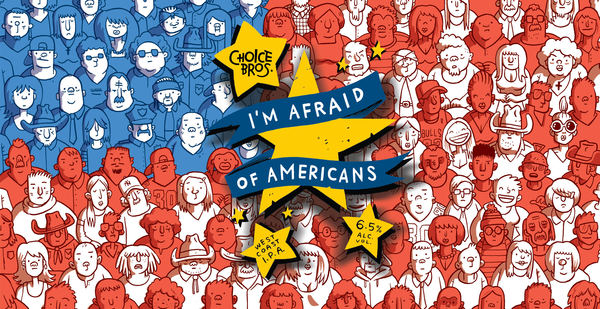
A good place to start is keeping it short and simple. Beer names can be longer than brewery names, sometimes substantially longer. Choice Bro’s I’m Afraid of Americans would be a good example of a long name that I think works (we’ll get to why names work soon).

Im_afraid

the art works nicely too.

But there is always a limit, and in my experience, if a customer can’t pronounce and/or remember the whole name of a beer from the time they’ve read the menu to when they make it to the bar, they’re less likely to order it or recommend it to a friend. The Moon Dog/Yeastie Boys collaborative beer Peter Piper’s Pickled Pepper Purple Peated Pale Ale (AKA The 7 ‘P’s) suffered from this.

Beyond keeping it short, what else can make it ‘catchy’? Hard to say. Poetic devices tend to help. Things like rhymingassonancealliteration and consonance can help. Names like Pils ‘n’ Thrills, Double Trouble, Red Rocks Reserve, Sauvignon Bomb employ these devices.

Likewise, humour can be a great tool for naming beers. In my experience, people can remember jokes easier than names. Puns and in particular beer-related ones, are often popular – like Four Horsemen of the Hopocalypse. But humour can be a double edged sword. Which brings me to…

2. Keep it Classy

Beers do need to be named in a manner that make them sound appetising. You might think it’s really funny to name your Porter with cacao nibs ‘Chocolate Starfish‘ (and so might your close friends), but be warned, a lot of people will be put off by the name and/or assume your beer literally tastes like arse. Also, I’m going to assume the people making/naming the beer are exactly the kind of horrific Dudebros we’ve all spent so long trying to exorcise from our industry and community.

Simple crassness aside, keeping it classy is a good principle to guide not only naming, but all sorts of branding and marketing decisions. I’m talking about controversy here. Stirring up controversy with a name that could be (or just is) sexist, racist, homophobic, etc. may be a cheap way to get media attention short term, but is a bad foundation for building a long-term customer base.

I won’t go into detail but I think we all know of breweries that have adopted this technique in the past. Ask them how it’s gone. Or I suggest reading Jim Vorel’s really excellent piece on the subject.

3. Themes are Good. sometimes.

Many breweries have themes to name their beers. For example Choice Bros. Uses Bowie lyricsPanhead has a hotrod motif (Super Charger, Blacktop, Boss Hog and so on), whereas Bach Brewing uses a beach theme in their beer names (Crayporter, Kingtide, Driftwood). Themes can be a great way to get build a consistent brand across a range of beers and in your customers consciousness. But they can get you into trouble in two different ways.

ParrotDog beer nice.

ParrotDog beer nice.

The first is slavish adherence. Breweries who stick too closely to a naming theme can end up painting themselves into a corner. ParrotDog for example, used almost exclusively dog or bird themed double-worded names for their beers (BloodHound, DeadCanary, BitterBitch). But coming up with names that fit that scheme is difficult, and we gradually saw them shift away from it with names such as RiwakaSecret, Pandemonium, and the RareBird series. Coming up with new beer names is hard enough, and imposing arbitrary restrictions on yourself only makes it harder.

The second way naming themes can get a brewery into trouble is when they make each of your beers essentially indistinguishable. For a really great illustration of this, we need to look overseas. Russian River, from Santa Rosa California. Their Barrel Aged/Belgian inspired range all have names that end in ~tion. As in: Redemption, Consecration, Damnation, Sanctification and so on. Now I’ve had a decent number of these beers, but I couldn’t tell you which ones. They’re all really excellent beers, but they’ve all sort of blended into one in my memory.

Likewise when naming beers, numbers are not your friend. Founders for example, uses years to name their beers – 1946, 2009, 1854, and so on. Again, I’ve had all of them, but could I tell you which one’s which? Nope.

4. Does it Do What it Says on the Tin?

In point five of How to Name a Brewery, I elaborated on the need to choose adjectives carefully – if you use an adjective in your brewery name that could theoretically apply to beer – a flavour, colour or aroma, customers will assume that it applies to your beer.

Now forgive me if it seems like I’m stating the obvious, but this principle applies doubly to beer names. The reason I am stating the obvious is that breweries still do it with surprising regularity. Infringements on this principle can be relatively minor – for example Townshend Black Arrow Pilsner which customers occasionally mistake for a dark beer, but because of the word ‘Pilsner’ mostly gets away with it. But sometimes a misplaced descriptor can cause real havoc with customers.

Pictured - one of my favourite Pilsners in New Zealand.

Pictured – one of my favourite Pilsners in New Zealand.

I still have vivid memories of pouring a beer at Hashigo (quite a few years ago) that committed this sin – Liberty Brewing Sexual Chocolate1. Sexual Chocolate was a beer that, although somewhat sexy, was not very chocolatey at all (it was a hoppy Brown Ale). Customers would order a Sexual Chocolate, and then almost immediately return it, claiming I’d poured the wrong beer: they were expecting a chocolate porter.

Eventually I started warning customers: “this beer is not very chocolatey, do you want to try it before you order?” If your beer needs to come with a disclaimer, then you should probably reconsider the name. I like to call this the ‘Does it do What it Says on the Tin?’ test.2

So let’s review. You’ve brewed a beer, picked out a name that’s short, punchy, uncontroversial, and accurately sells the beer’s attributes. But you’re not there yet, you have to do one more thing.

5. Google It

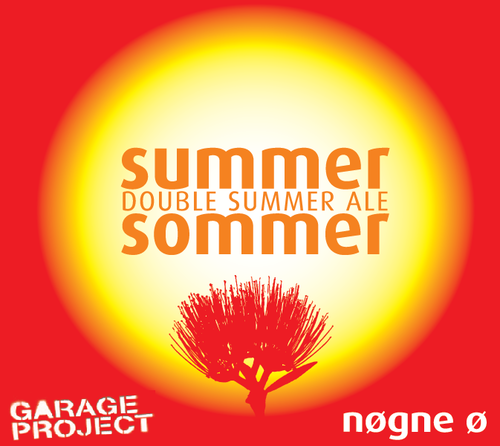
Maybe I should really say Untappd it, but either way, check to see if any other brewery is using the same name. On this one I’m talking from experience. Many years ago, I made a video of a collaboration brew between Garage Project and Nøgne Ø Brewery. The beer needed a name and I suggested Good as Gøld, without checking it on Untappd or RateBeer. Silly me, because it already existed. I really should have checked.

Eventually, the beer would be called 'Summer Sommer'.

Eventually, the beer would be called Summer Sommer.

Stouches over names are fairly infrequent, but double-ups can happen quite often. If a name seems absolutely perfect, there’s a good chance that someone else has got to it before you. Which isn’t to say that double-ups are necessarily a disaster. If a little brewery in another country that will never ever be seen in New Zealand is already using a name, then go right ahead anyway. But if it’s another NZ brewery using it, you need to start again, out of courtesy if nothing else.

It is, however, a different matter if it’s a really famous or iconic beer from another country. If an NZ brewery ever dared to name a beer, ‘Pliny the Elder’, ‘Heady Topper’, or ‘Sculpin’, then they fully deserve to be dragged over a bed of hot coals.


Coming up with names for anything is hard – just ask any parent. Some breweries have a knack for it, while others seem to struggle more. These guidelines are a good place to start, but they’re also not bullet proof. I can think of some absolutely terribly named beers out there that don’t technically break these rules, but are still somehow clunky, unappealing, or just sound wrong.

If a brewer ever wants to run a name past me, feel free. You can reach me on twitter any time.


 NOTES

1. There seems to be no record of this beer online except in DEEP in Hashigo’s newsletter archives

2. Strangely enough, Yeastie Boys did the exact same thing with their beer Kid Chocolate, which had almost nothing chocolatey about it at all. Yes, that was released seven years ago. I have a long memory and I’ve been doing this for a long time. 

What Your Beer Choice Says About You

Today the world of beer has become fragmented. Where once in New Zealand it was ‘lager’, ‘draught’ or if you were very lucky, ‘dark’. But now we have any sort of beer you can imagine (and several you can’t). But how does your beer choice reflect on you?

The internet is full of silly great advice for American beer drinkers, but what about the humble Kiwi? What do our beer choices say about us? Well, fret no more. Here’s the definitive list:

Lager/Pilsner

You are most likely right-handed. Also you like lager.

Source.

Fig. 1: A Lager                                                    Source.

Pale Ale

Your height is probably between 132-192 centimetres tall. You like hoppy, pale beers.

Fig. 2: A Pale Ale Source.

Fig. 2: A Pale Ale                                                  Source.

Wheat Beer

Bad news: you probably have herpes, most likely without knowing it. And you like wheat beers.

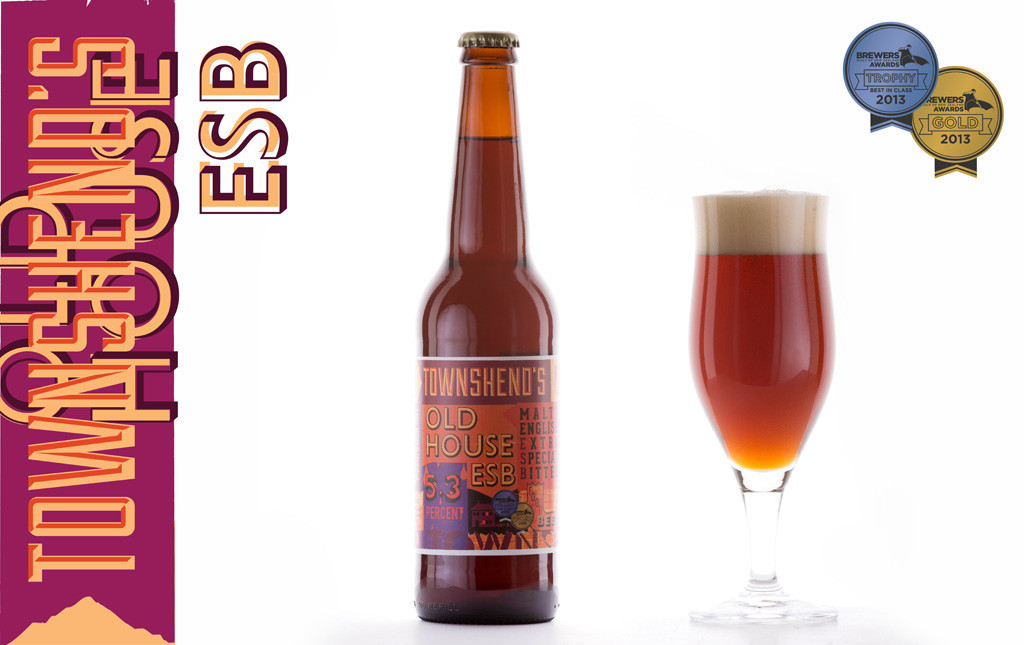
Mild/Bitter/ESB

Good news: you are probably immune to leprosy. You’re also a fan of traditional English ales.

Fig. 3: An ESB Source.

Fig. 3: An ESB                                                                                             Source.

Stout/Porter

If you’re European, there’s a statistical certainty you’re a descendant of Charlemagne. And you like dark beer.

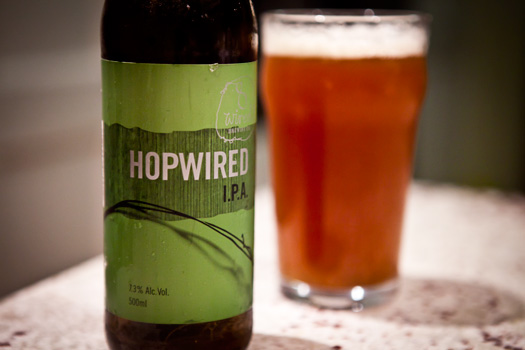
IPA

If you’re male, there is a ~1/200 chance you’re a direct descendant from Genghis Khan. If you’re a Chinese male, that figure goes up to ~1/12. You’re also an IPA enthusiast.

Fig. 4: An IPA Source.

Fig. 4: An IPA                                                                                    Source.

Black IPA

You’re a weirdo.

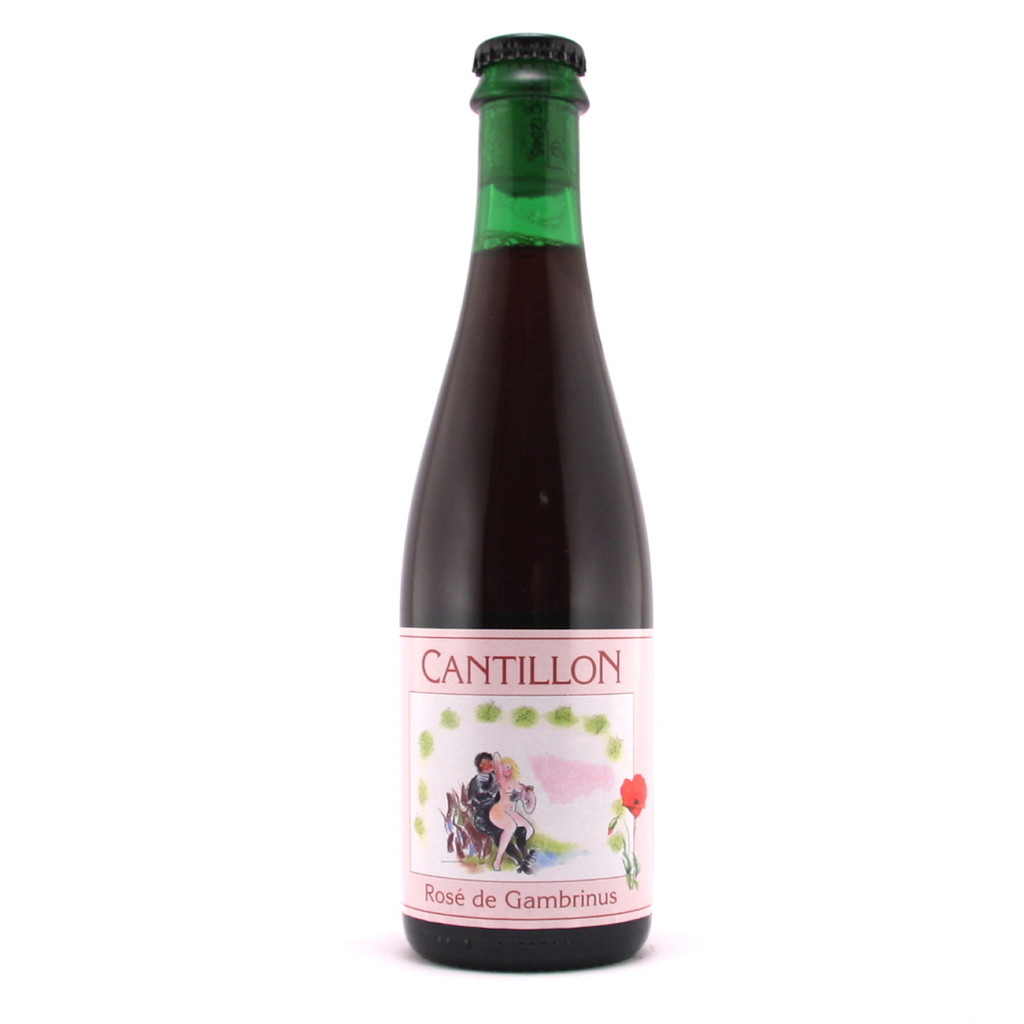
Sour/Wild Beer

Your liver is worth ~$157,000 (US) on the black market. Of course, drinking too much of that sour beer you love may decrease that value. The good news is, it should increase its value as foie gras.

Fig. 5: A sour Beer    Source.

Fig. 5: A Sour Beer                                              Source.

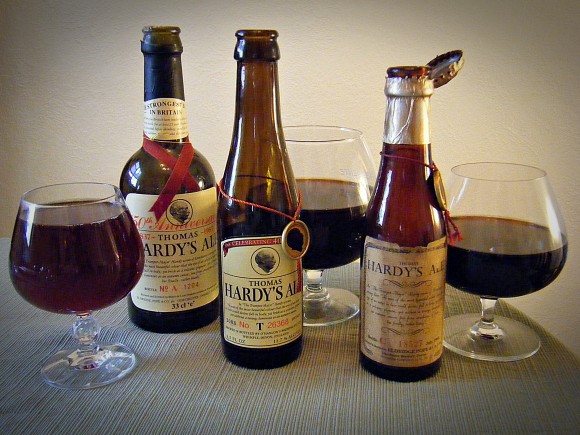
Barleywine

You’re hopefully too smart to fall into lazy stereotyping of beer drinkers according to style, glass preference, gender, class, race, ethnicity or any other silly, arbitrary, irrelevant factor.

And you like Barleywine.

Fig. 6: Several Barleywines     Source.

Fig. 6: Several Barleywines                                                     Source.

.

.

.

.


Cat Beer.gif

Scott was right – it’s just not clickbait without a cat gif.

Podcast: Will it Shandy?

There’s something not many people know about me. I love shandies and radlers – the humble blend of beer and lemonade. Phil Cook, my friend and colleague also shares this passion.

We got together one warm summer’s evening with a selection of beers that might be considered ‘unconventional’ blending material, in a quest to answer that age old question that has plagued humanity: “Will it Shandy?”


Will it Shandy can be streamed here, or over on The Beer Diary. To download, click the icon in the top right corner, under the Soundcloud logo or go here.

Our title track is Square Beer by The Coconut Monkeyrocket.